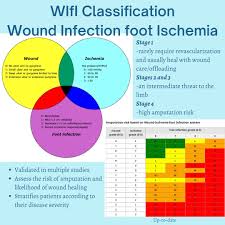
Risk stratification based on Wound, Ischemia, and foot Infection (WIfI)
PROMO

Risk stratification based on Wound, Ischemia, and foot Infection (WIfI)

0 avis

The Society for Vascular Surgery Lower Extremity Threatened Limb Classification System: Risk stratification based on Wound, Ischemia, and foot Infection (WIfI

Langue :EN
Catégories :Endocrinologie, Chirurgie vasculaire
Niveau :Médecin Généraliste, Médecin Spécialiste, Résident
Format :PDF
Type :Conduite et Guide Pratique, Livre et Revue Médicales, Protocoles Médicaux
Mise à jour :1 mars 2026

$4.99$5.99
ÉCONOMISEZ 17%
VISA
MC
Paypal
Paiement sécurisé

Critical limb ischemia, first defined in 1982, was intended to delineate a subgroup of patients with a threatened lower extremity primarily because of chronic ischemia. It was the intent of the original authors that patients with diabetes be excluded or analyzed separately. The Fontaine and Rutherford Systems have been used to classify risk of amputation and likelihood of benefit from revascularization by subcategorizing patients into two groups: ischemic rest pain and tissue loss. Due to demographic shifts over the last 40 years, especially a dramatic rise in the incidence of diabetes mellitus and rapidly expanding techniques of revascularization, it has become increasingly difficult to perform meaningful outcomes analysis for patients with threatened limbs using these existing classification systems. Particularly in patients with dia betes, limb threat is part of a broad disease spectrum.

Produits récemment consultés

Vos produits consultés s'afficheront ici...